A match made in heaven?
Are the Emperor and the Empress the only pair in the tarot?
Surely the other twenty cards weren't all meant to remain single.
The Pairs in the Tarot
Let's meet. Some other couples.
It's no secret that the Emperor and the Empress form the imperial couple of the tarot. They are frequently described as a pair, sometimes even as partners. But even without such descriptions, their relationship would be immediately apparent to most people.
As if their titles weren't enough, some tarot decks emphasize their relationship by giving them similar attributes or depicting them in almost identical poses.
But we don't even need such obvious clues to recognize that these two cards represent opposing principles. Take, for example, the Emperor and the Empress in the Rider-Waite-Smith Tarot. We need only ask one simple question: what are they sitting on?
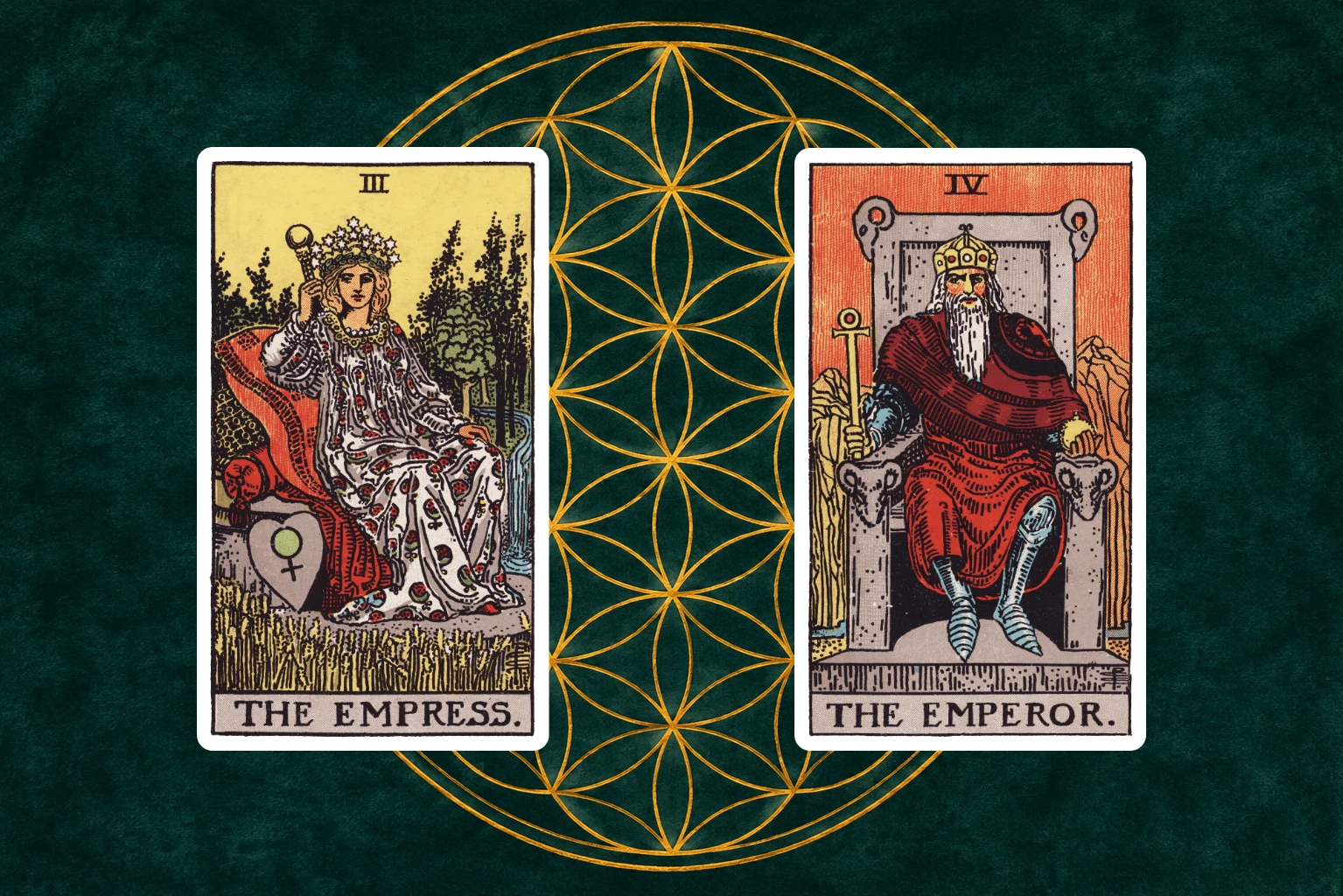
The Emperor sits upright on his stone throne, with barren mountains rising behind him. He represents structure, order, stability, protection, and boundaries. The mountains behind him reinforce these qualities, emphasizing firmness and limitation.
The Empress, by contrast, sits in a relaxed position, resting comfortably against her cushions. Her dress is decorated with pomegranates, while lush vegetation surrounds her and a river flows through the landscape behind her. She represents fertility, growth, creativity, and the abundance of life.
What these cards mean to us in a particular reading may vary, but their underlying symbolism reveals a clear contrast. At the same time, these opposing principles complement one another. And that is precisely what makes the Emperor and the Empress a pair.
But I'm probably not telling you anything you didn't already know. So let's move on to a more interesting question: what other pairs can we find among the twenty-two cards of the Major Arcana?
The High Priestess and the Magician
The High Priestess and the Magician are also frequently considered a pair. And when we place their cards side by side, it isn't difficult to see why.
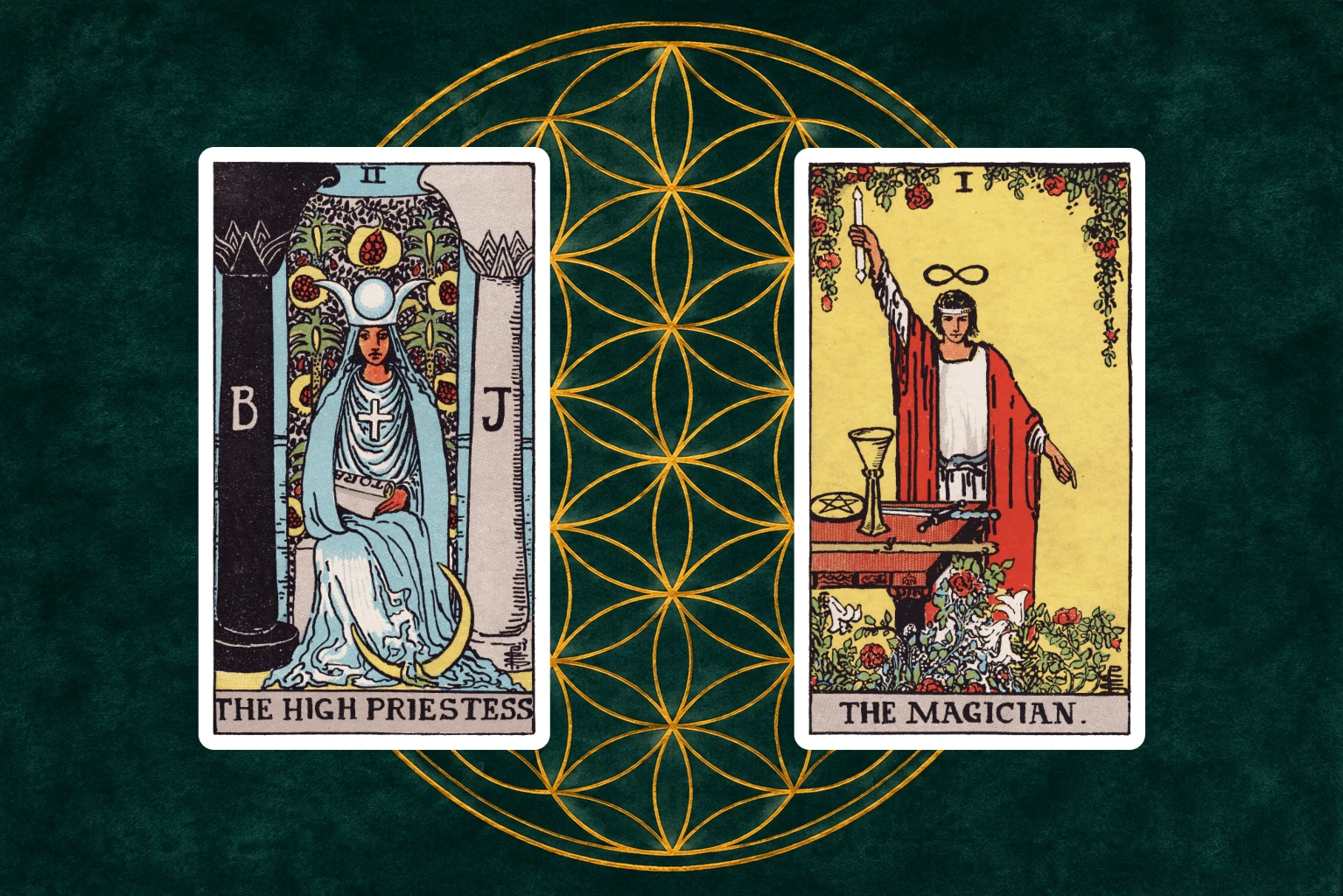
The Magician is performing a ceremony. He is active, working with the symbols and objects laid out on the table before him. Although he is concerned with the inner world, he approaches it through outward forms. He gives expression to what is within, creating a bridge between the inner and outer worlds.
With the High Priestess, the movement is reversed. Rather than expressing the inner world through outward symbols, she invites us to look beyond those symbols, toward what lies behind them. Look closely at the card. Beyond the veil and the two pillars, we discover a sea. This is the inner sea, not fixed in symbols, but constantly in motion. A sea that might bring to mind the alchemical idea of dry water — Aqua Sicca.
Here, too, we seem to have discovered a pair: two complementary movements, one outward and the other inward.
But not everyone agrees.
Some prefer to pair the High Priestess with the Hierophant. After all, the Hierophant was traditionally known as the Pope, while the High Priestess was once called the Popess. In this interpretation, the High Priestess still represents the inward path, while the Hierophant stands for tradition, established teachings, and the outward expression of spiritual knowledge. And to be fair, there is something to be said for that interpretation as well.
So where does that leave us?
Our first step, then, is to acknowledge that we cannot yet say with certainty which cards form a pair. But that is no reason to abandon the search. Quite the opposite.
What has become clear, however, is that the idea of pairs within the Major Arcana is hardly unusual. Different methods have even been proposed to arrange all twenty-two cards into eleven pairs.
Let's take a brief look at two of them.
The Numerical Approach. Does it add up?
Probably the simplest of these methods is to pair cards whose numbers add up to twenty-one.
In this method, the Fool (0) is paired with the World (21), while the Magician (1) is paired with Judgement (20). And so on.
Simple enough. Every card finds its counterpart, and the entire Major Arcana can be divided into eleven pairs.
At first, the Emperor would probably be delighted with such an approach. After all, what could be better than a solid, consistent structure? But his enthusiasm wouldn't last long. To his surprise, he would discover that he is no longer paired with his beloved Empress. Since the Emperor is numbered 4, his new partner becomes the Star (17).
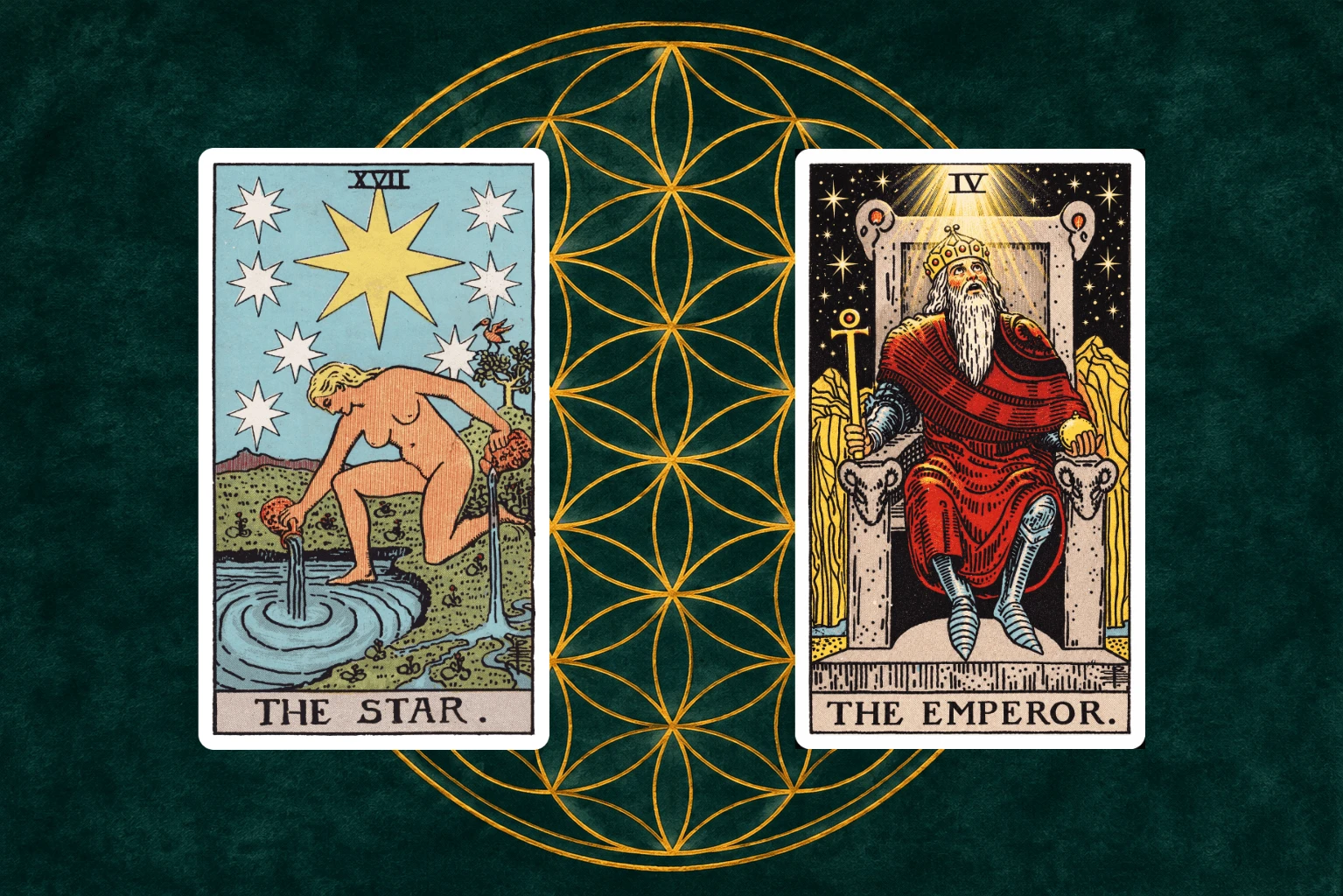
And the Empress? As card number 3, she now finds herself paired with the Moon (18).
A rather unexpected arrangement, to say the least.
Why should the Emperor suddenly find himself paired with the Star? And why would the Empress be paired with the Moon? What makes these relationships more meaningful than the one we recognized so readily between the Emperor and the Empress?
The numerical method certainly produces a consistent arrangement. But consistency alone does not explain why the resulting pairs should be considered meaningful opposites.
But the tarot encourages us not to choose one opposite at the expense of the other. Instead, it invites us to recognize how opposing principles complement one another — and to bring them together.
The Astrological Method. Another Approach
Another approach is to use the astrological correspondences associated with the tarot.
For instance, the Hierophant is associated with Taurus, while Death is associated with Scorpio. Since Taurus and Scorpio are opposite signs in the zodiac, this would make the Hierophant and Death a pair.
Following the same reasoning, the Emperor, associated with Aries, would be paired with the card associated with Libra: Justice.
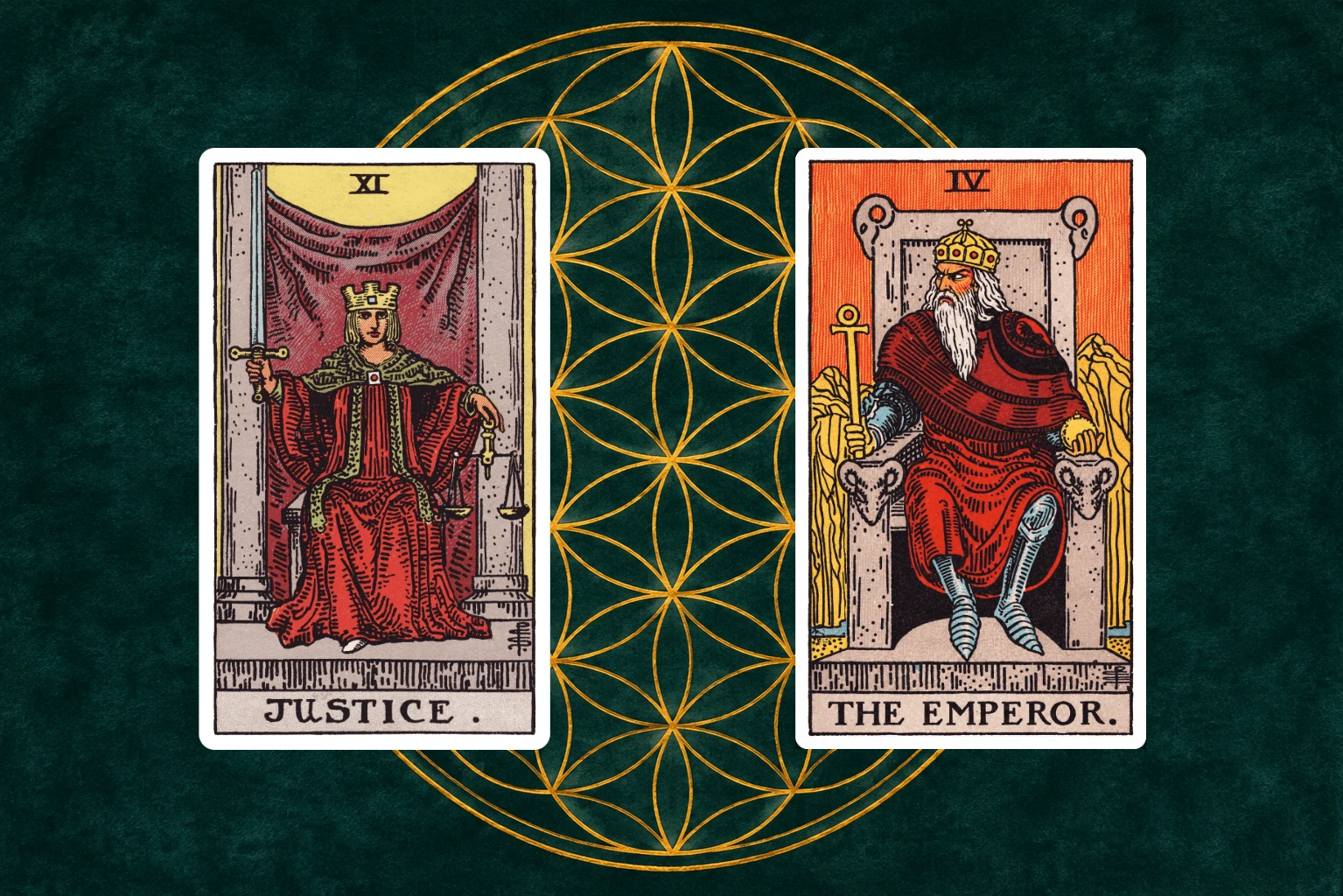
And once again, the Emperor and the Empress find themselves separated.
But the question remains: why should these correspondences determine which cards belong together? We might discover meaningful connections through them. Yet that does not necessarily mean they provide the underlying structure of the Major Arcana.
When methods produce relationships that seem less convincing than those we can recognize in the cards themselves, it is tempting to abandon the search for an underlying structure altogether. But perhaps the problem is not that we are looking for a system. The problem arises when we impose one on the cards instead of discovering the structure they may already reveal.
Balance. The Way of the Tarot.
The difficulty with these approaches is that they begin with a method rather than with the cards themselves. The tarot is, above all, a book of images. And if we want to understand it, shouldn't we begin by looking at what those images have to tell us?
And one of the first relationships they reveal is that between the Emperor and the Empress.
What can this pair teach us?
The Emperor represents structure, order, and stability. The Empress represents creativity, receptivity, and the freedom to let things unfold. Neither principle is complete without the other. Their strength lies not in their opposition, but in the way they complement one another.
Perhaps we should approach the tarot in much the same way.
A systematic approach can help us discover order and coherence, but only if we remain open to what the cards themselves reveal. We need both the discipline to recognize a consistent structure and the freedom to discover relationships we might otherwise overlook.
In other words, we need both the Emperor and the Empress.
Seek and guard coherence like the Emperor, but give the cards the freedom to tell their own story. And if we do, what might they reveal about their relationships — and about the structure of the tarot as a whole?
Could we begin to see the tarot as a living mandala?Further explorations
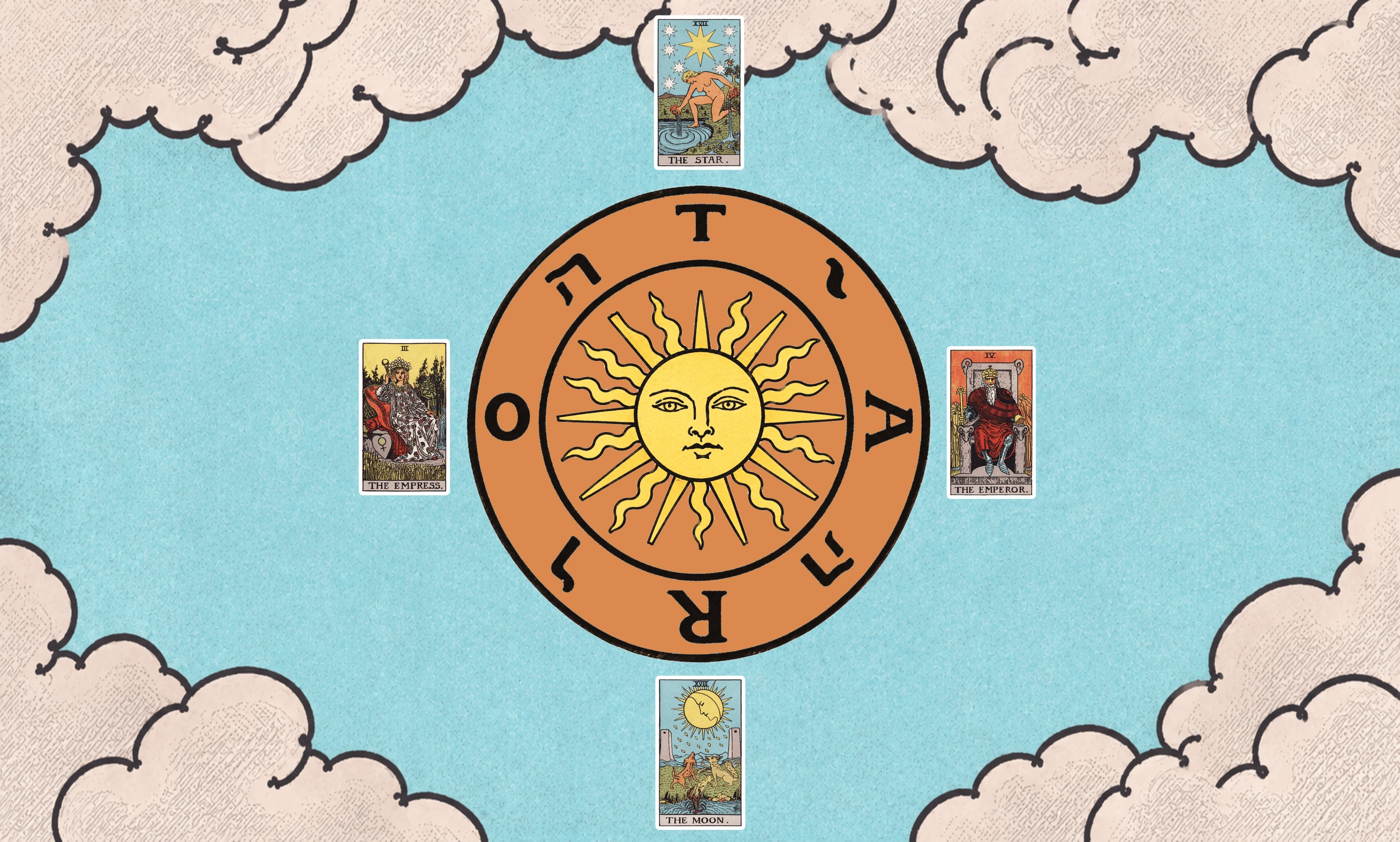
The Mandala of the West
A Living Mandala
The tarot is a living mandala. Because ultimately, it is your own mind.