
The Universal Teaching
The three keys.
Before we explore the significance of the three keys within Western esotericism, it is worth saying a few words about Hermetic philosophy.
In academic circles, Western esotericism is also studied under the name “Hermetic Philosophy and Related Currents”. This places Hermetic philosophy at the heart of Western esotericism. It encompasses various esoteric systems, including alchemy, also known as the Hermetic Art, and the Western branch of Kabbalah, known as Hermetic Kabbalah or Qabalah. In symbolic imagery, Hermetic philosophy is sometimes represented as a walled rose garden that cannot be entered.
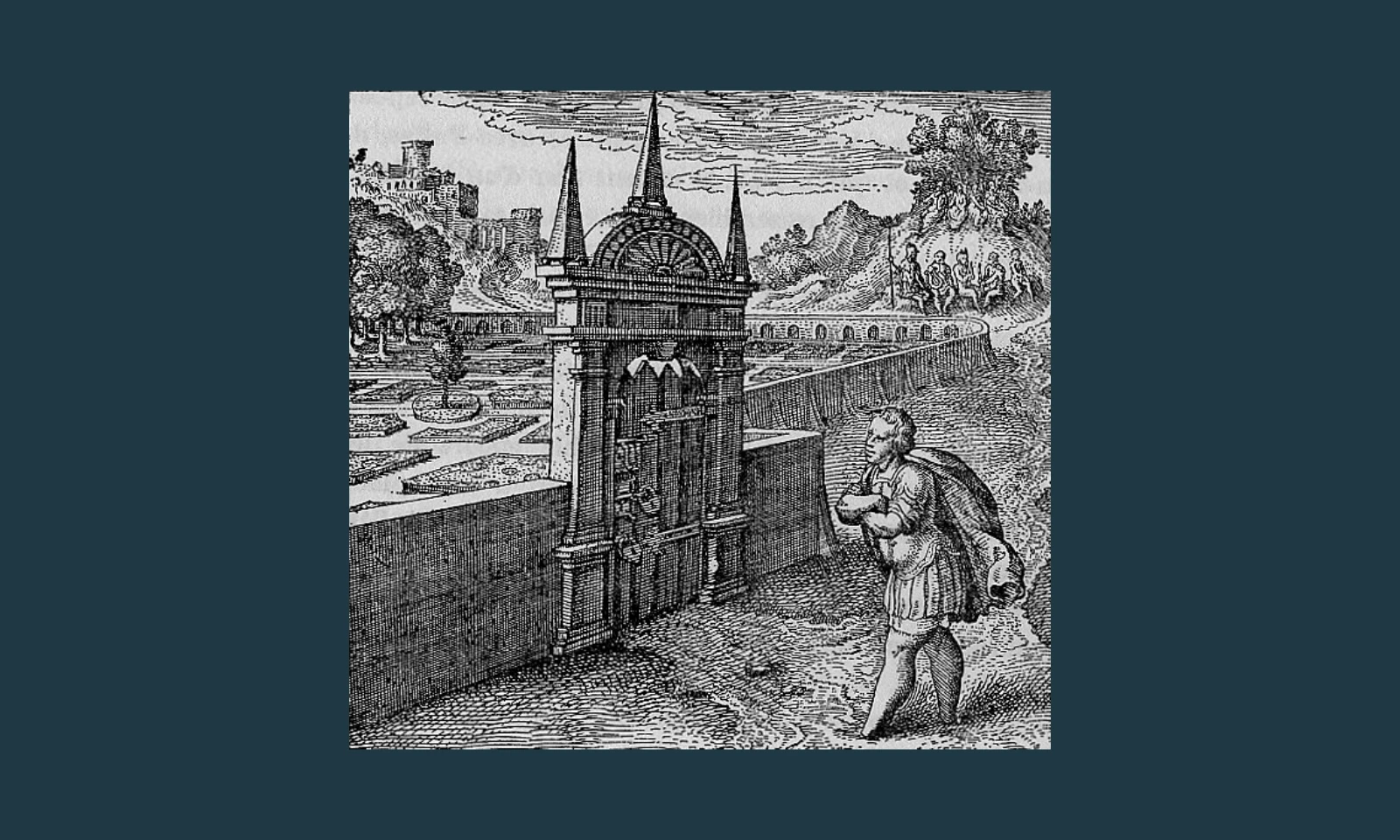
In this alchemical emblem from Atalanta Fugiens, we see a man standing before the entrance to the rose garden. He has no idea how to get inside, and he seems to be missing his feet.
The emblem bears the following motto:
Whoever dares to enter the Rose Garden without a key is like someone attempting to walk without feet.
Clearly, then, we need a key to gain entrance. But where are we to find it? When we begin to look, we discover that a few remarkable keys lie hidden within Western esotericism. Three stand out in particular: the Tree, the Flower, and the Quadrature, commonly known as the Tree of Life, the Flower of Life, and the Squaring of the Circle.
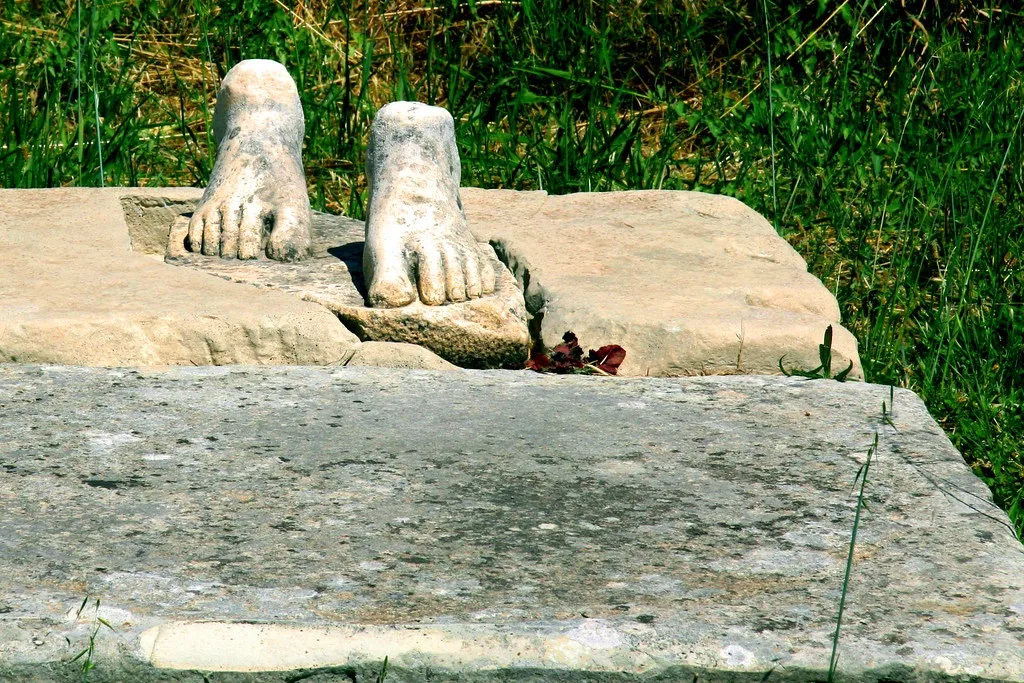
Before turning to the differences between these keys, it is important to recognize what they have in common. All three are, in essence, geometric patterns — blueprints that connect the many seemingly unrelated elements of Western esotericism. They allow us to perceive connections that would otherwise remain invisible, bringing together scattered fragments of knowledge into a coherent whole. In this way, a solid foundation begins to emerge. And once that foundation is in place, we gain a clearer perspective and discover, much to our surprise, that we are already standing in the midst of the Hermetic Rose Garden.
The keys are not complicated intellectual constructions. Of course, there will always be people who make the simple unnecessarily complicated. Admittedly, the alchemists themselves were rather good at this. Yet the Hermetic philosophers make it clear that we learn geometry from nature. They often write the word with a capital letter: Nature. And does Nature not deserve a capital letter, after all?
The Quadrature Simplicity
Although the Squaring of the Circle sounds the most complicated, this is not actually the case. In essence, the Quadrature is the simplest of the three keys. The Flower of Life, too, is simpler than it first appears. Its apparent complexity comes largely from the way its circles interlock, creating beautiful patterns that can make its underlying simplicity difficult to recognize. The Tree of Life, however, is another matter. It is often regarded as one of the most complex symbols, and for that reason tends to appeal particularly to those who value systems and structure. Yet when we focus on its foundations, even the Tree of Life is not difficult to understand.
Which of the three keys appeals to you most depends largely on how much structure you prefer and how deeply you wish to explore the details. This naturally varies from person to person. But there is no need to choose between structure and simplicity. The two can coexist perfectly well.
Perhaps the best place to begin is with the Quadrature. The solid foundation it provides may already be enough for many. It plays a crucial role in alchemy, particularly in the quest for the Philosopher’s Stone, and forms the basis of all mandalas, including the Tarot.
But before showing just how simple the Quadrature is in essence, it is worth looking at an example of the mysterious language in which the alchemists describe it — and how, if we look closely, simplicity lies hidden beneath that mystery.
Further explorations
The Universal Teaching
The Search for Unity
Exploring the underlying patterns that connect esoteric systems.