Look through the eyes of your inner sun.
The Mandala of the West
The Tarot. A living mandala.
The tarot is remarkably flexible and can be used in many different ways. This flexibility is important, because we can see the tarot as a mirror of our inner world. It is a tool for visualizing and bringing order to our minds. And the human mind is remarkably flexible, constantly in motion. If the tarot is to reflect our minds, it must be just as flexible. The downside, however, is that this can make it difficult to get a grip on.
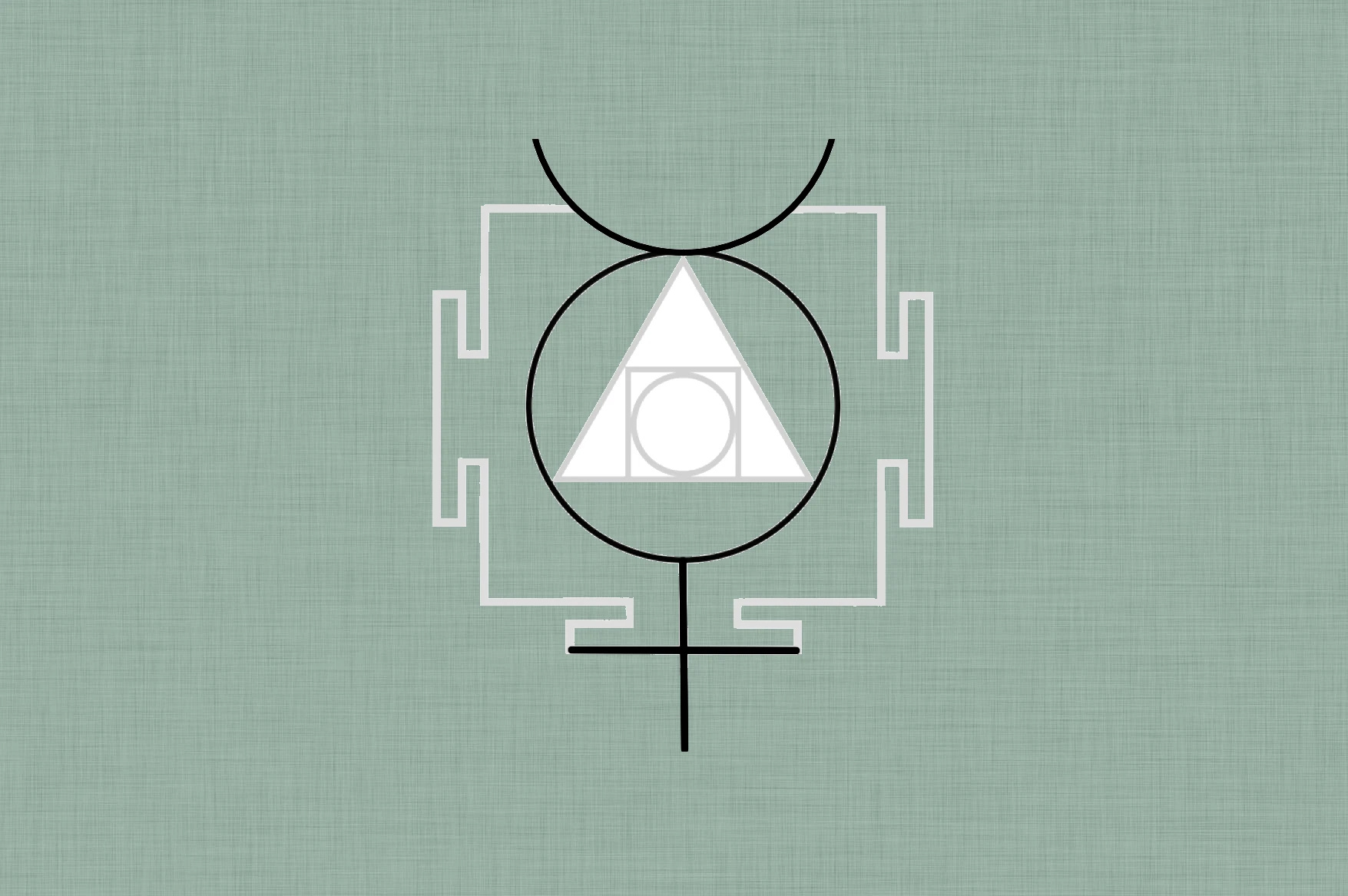
That changes when we begin to recognize the tarot as, essentially, a mandala. A mandala is a geometric pattern that brings order to the cosmos or to our minds.
This ordering does not happen all at once. It is a process, something constantly in motion. That is why it is sometimes said that the images of the tarot are not fixed, but continually changing. All the cards of the tarot refer to one another, together forming an enormous mandala. Perhaps even the most intricate mandala in the world. As we become more familiar with the tarot, this mandala gradually begins to crystallize in our minds.
But where do we begin?
Turn, turn, Turn.
As always, the best place to begin is at the beginning. In its simplest form, a mandala is just a circle. So let's turn to the circle we find in the tarot: the Wheel of Fortune.
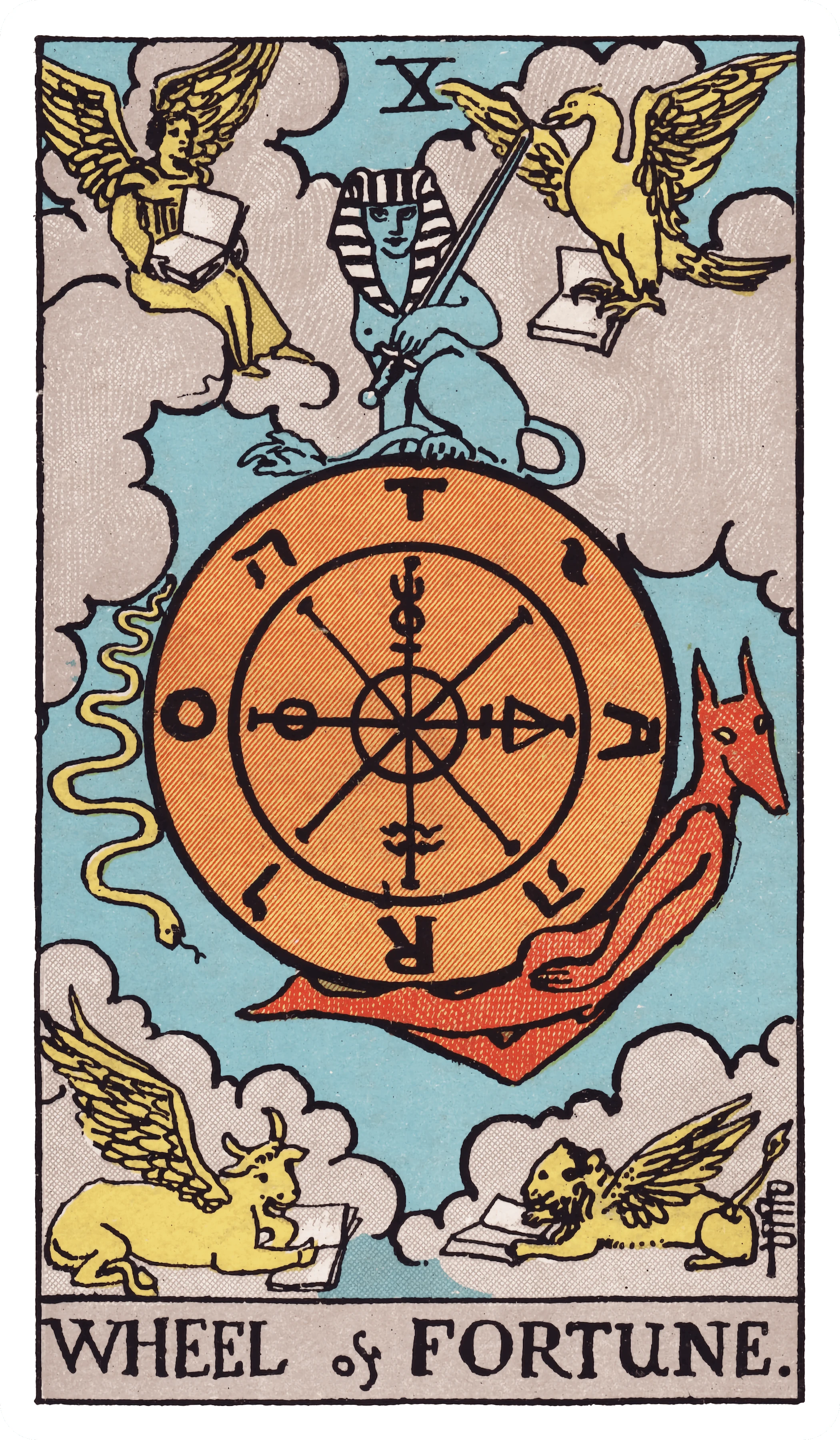
It is sometimes said that all the other cards of the tarot revolve around this wheel. Although this creates a beautiful image, it doesn't immediately help us make sense of things. When everything is in motion, it is difficult to get a grip on anything. So let's begin by looking for a fixed point.
Fortunately, every circle has a center. And at the center of the wheel, we find its axis. While the wheel keeps turning, much like our restless minds, the axis remains still. Here, at the heart of the wheel, lies our own center, from which we can calmly observe the movement around us. What we have now is simply a circle with a point at its center.
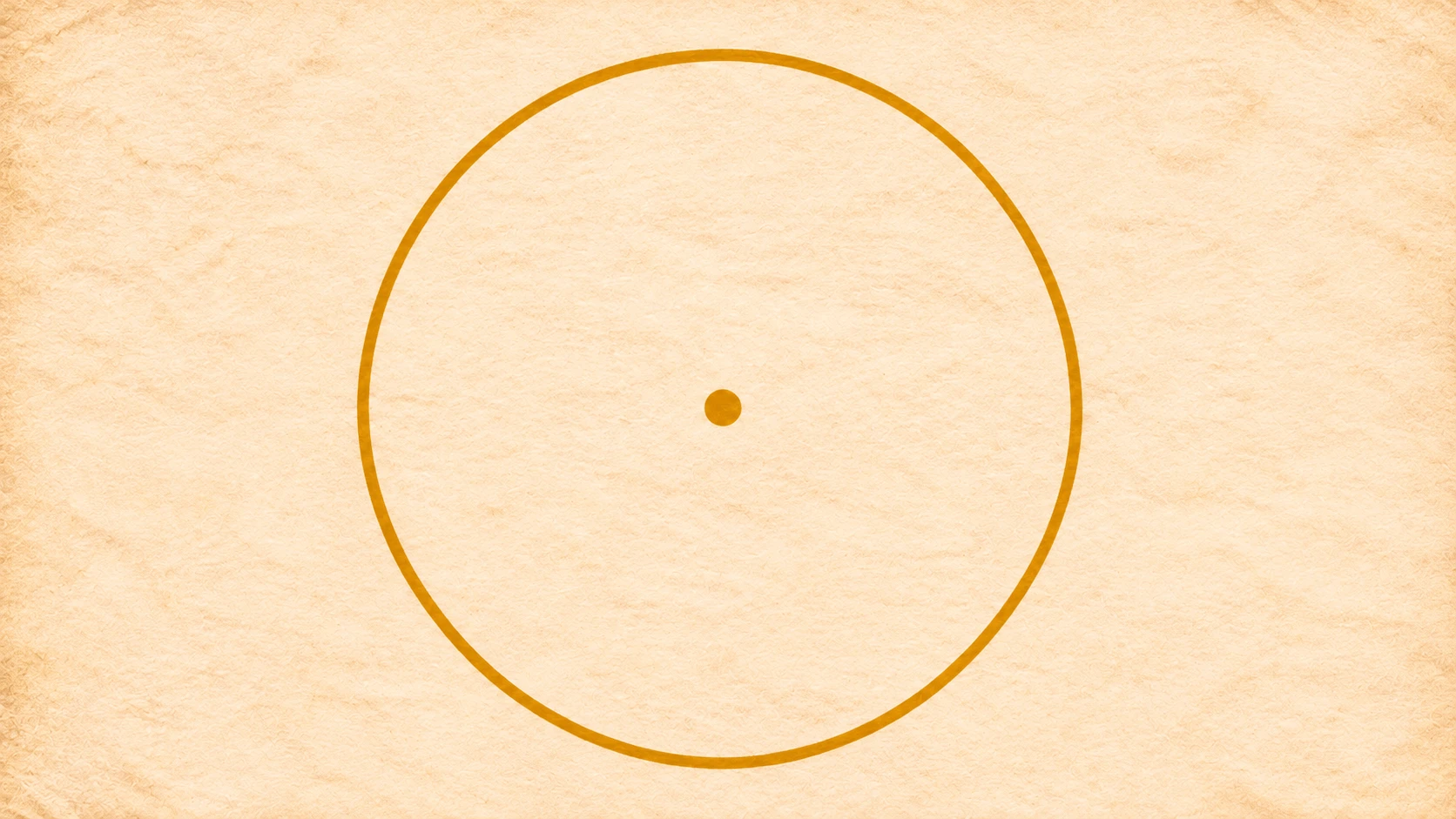
Quite coincidentally, this is also the astrological symbol for the Sun. Thousands of years ago, the ancient Egyptians already used a similar circular hieroglyph to represent the Sun. It probably needs little explanation why the Sun should represent the center. In the larger picture, the macrocosm, it is literally the Sun around which we revolve. In the microcosm of the human mind the symbol represents the radiant self, shining from our innermost center. We might think of it as our inner light. As a kid might ask: "How can I see with my eyes closed?"
Now, it is no coincidence that the Wheel of Fortune in the Rider-Waite-Smith Tarot is depicted as an orange disc suspended in the sky. In esoteric writings, we find orange associated with the Sun.
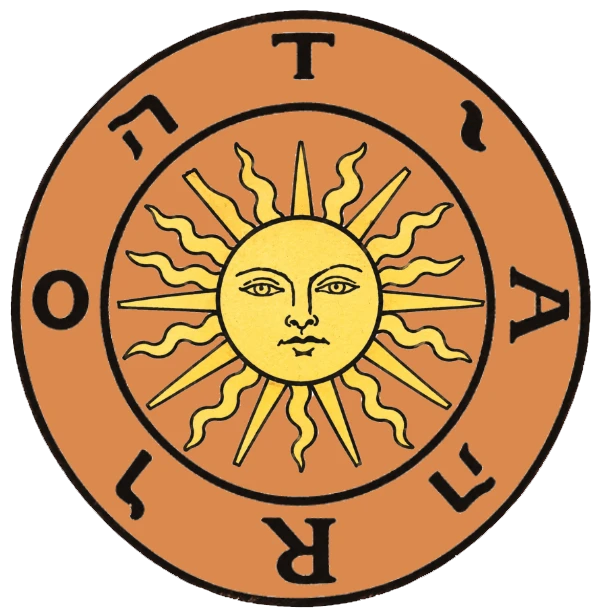
Not that we really need this explanation, since the connection between the Wheel of Fortune and the Sun is clear enough. Together, the Sun and the Wheel form the Solar Wheel, one of the oldest symbolic motifs.
Could we have discovered another pair in the tarot? Let's bring in the Sun card and take a look.
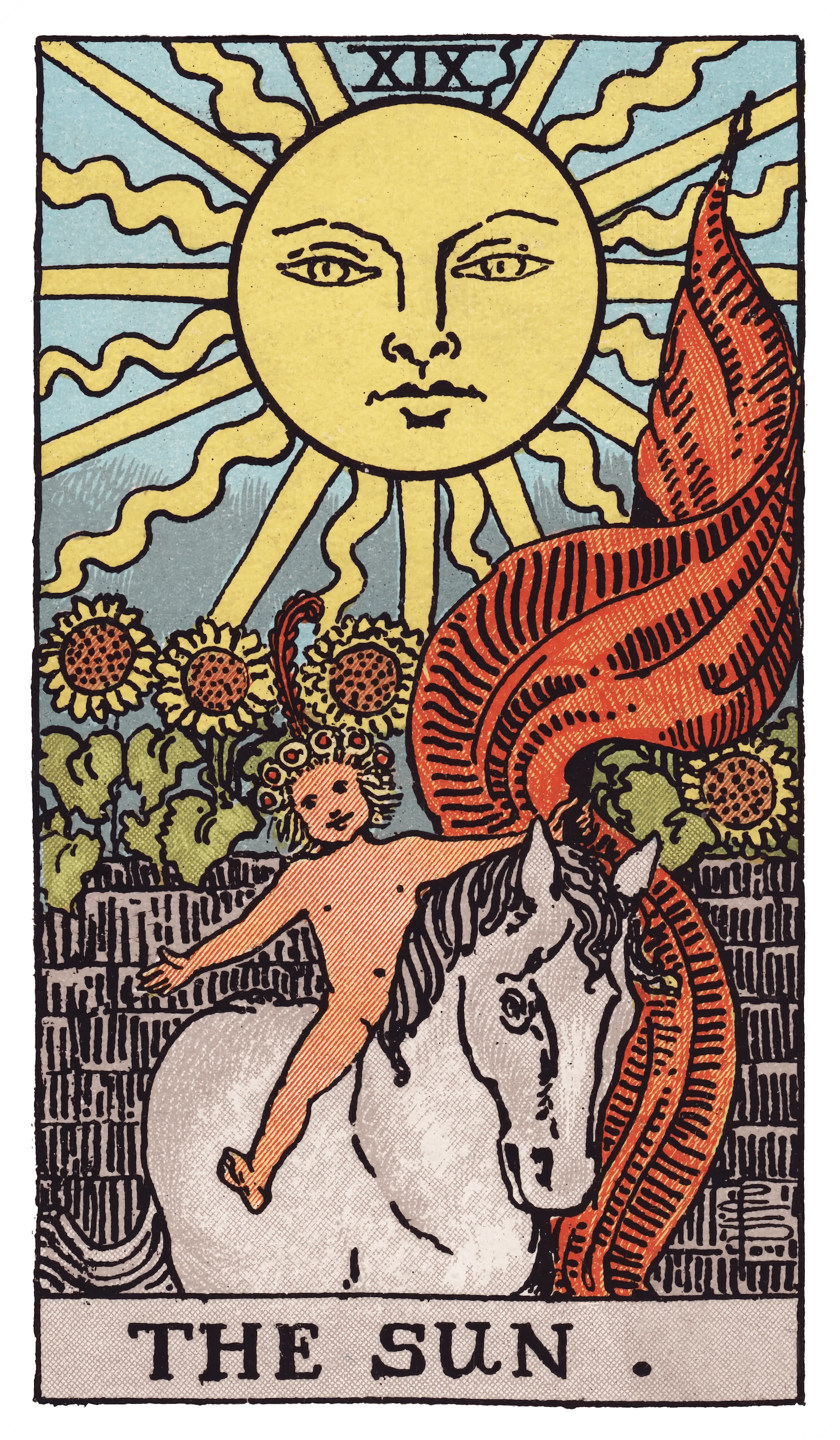
While the wheel keeps turning, the Sun remains still at its center. Here, then, we have a clear pair of opposing principles. On the Sun card, we see a child joyfully riding a white horse. The child represents our inner child, the part of us that remains forever young. At the outer edge of the wheel, time passes. The hands of the clock keep turning in circles, and we grow older. But at the center, we return to the self that transcends time. Here we find the eternal child, forever radiant: our inner Sun.
The Moon and the Star
Now that we have brought in the Sun, we might notice that there are two other celestial bodies represented by cards in the tarot. Of course, I am talking about the Moon and the Star. The Moon is closest to Earth, while the Star is the farthest away. Once again, we seem to have discovered a contrast. Another pair? Could it really be that simple?
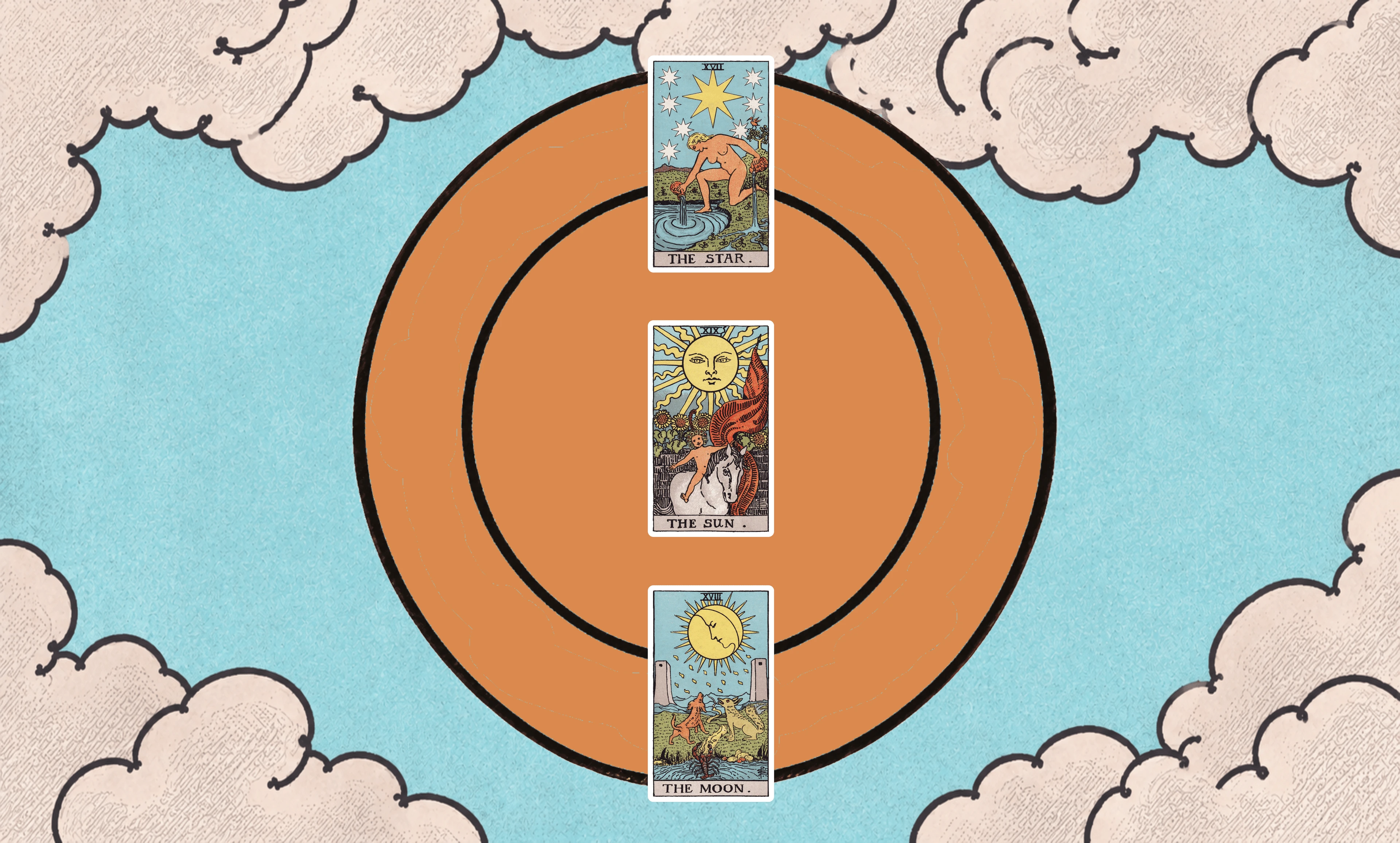
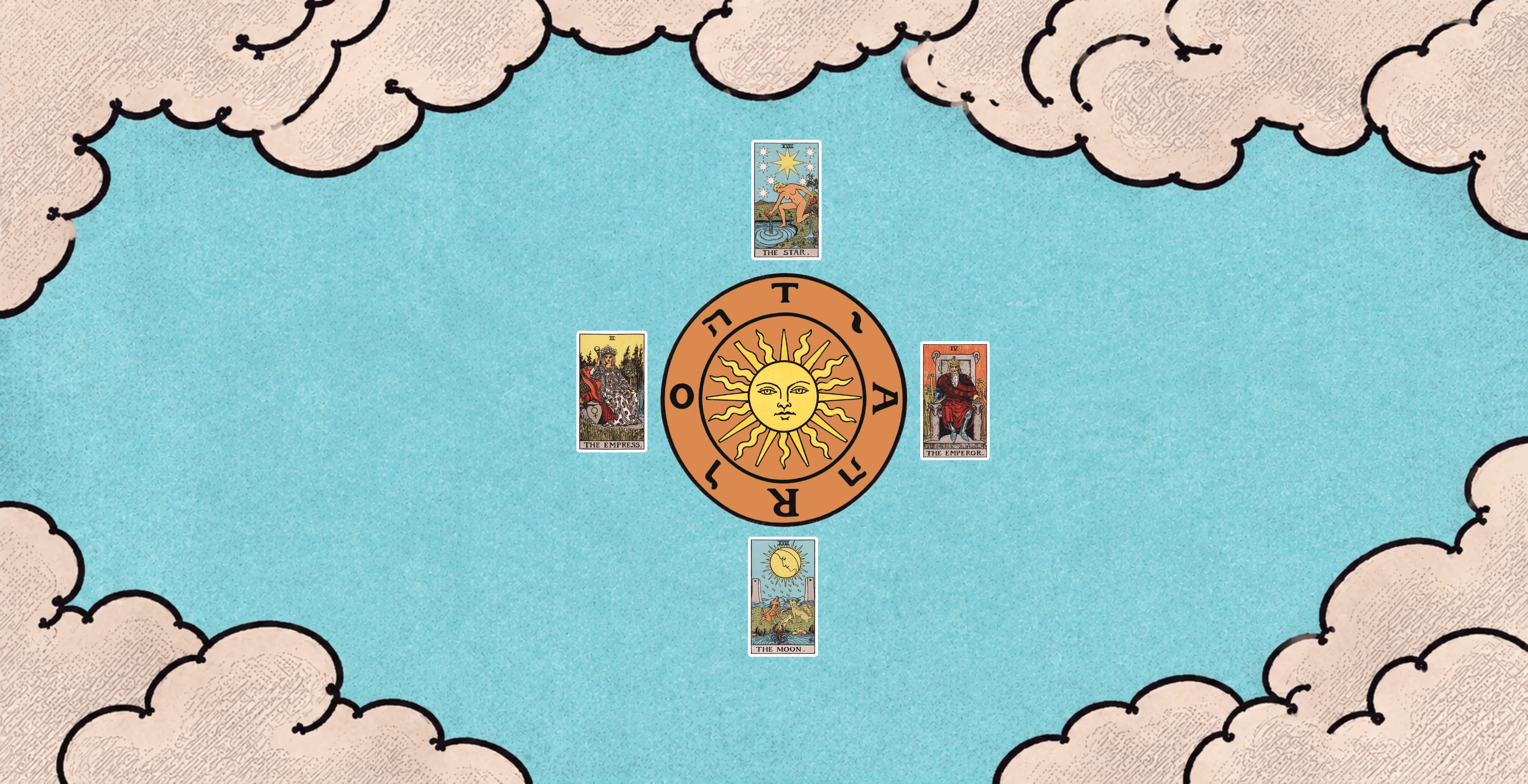
We place the Moon at the bottom of the wheel and the Star at the top. We now have a natural arrangement of the Moon, the Sun, and the Star. The mandala we have created shows us the movement of the mind, a fixed center, and an above and below. Put simply, the Star represents our higher self, while the Moon represents the intelligence and consciousness closely connected to the body. It is a mirror of our own minds, showing us how we are connected to the macrocosm: "As above, so below."
A Childlike Approach
The examples so far are mainly intended to show that we can discover pairs in the tarot quite naturally, without forcing anything. We don't need to impose a structure to arrive at an arrangement.
And it also requires balance, because in the tarot, everything revolves around balance. We might even say that this is one of the greatest gifts the tarot has to offer: it helps us find our balance, the golden mean.
When we approach the tarot with wonder and reverence, it teaches us, for example, to remain centered (the Sun) amid all the movement around us (the Wheel), and to find the right balance between our higher consciousness (the Star) and our bodily intelligence (the Moon). After all, if we reach only for the stars, we may soon lose the solid ground beneath our feet and drift away. We need the magnetism of the Moon to keep us grounded.
The tarot can also teach us a great deal about our search for order and structure. As we explored in Meet More Couples, we should not impose a structure on the tarot, but allow it to emerge from the cards themselves. If we try to force the tarot, it will not reveal its wisdom to us. We are dealing with an oracle, and an oracle should be approached with an open and receptive mind. It is not enough to regard the tarot as a mere collection of cards. For those who wish to work with it, it is something alive. A living mandala. Because ultimately, it is your own mind.
Do we still marvel enough at our own minds? Do we realize that the human mind remains a mystery?
Keeping It Simple
The mandala we have created is, of course, still extremely simple. And that is precisely how we should begin. If we get lost in details too quickly, we risk forgetting what matters most: the meaning behind it all. You could spend the rest of your life puzzling over the tarot without ever putting any of it into practice. And everyone is perfectly free to do so. But you could also make a simple beginning and actually work with it. And truly, the tarot opens itself only to those who are willing to play with it. Those who dare to be children again.
That said, it is only natural that we should want some structure. Symbols without structure, after all, only create more chaos. So let's add two more cards to our mandala. We place the Empress on the left and the Emperor on the right.
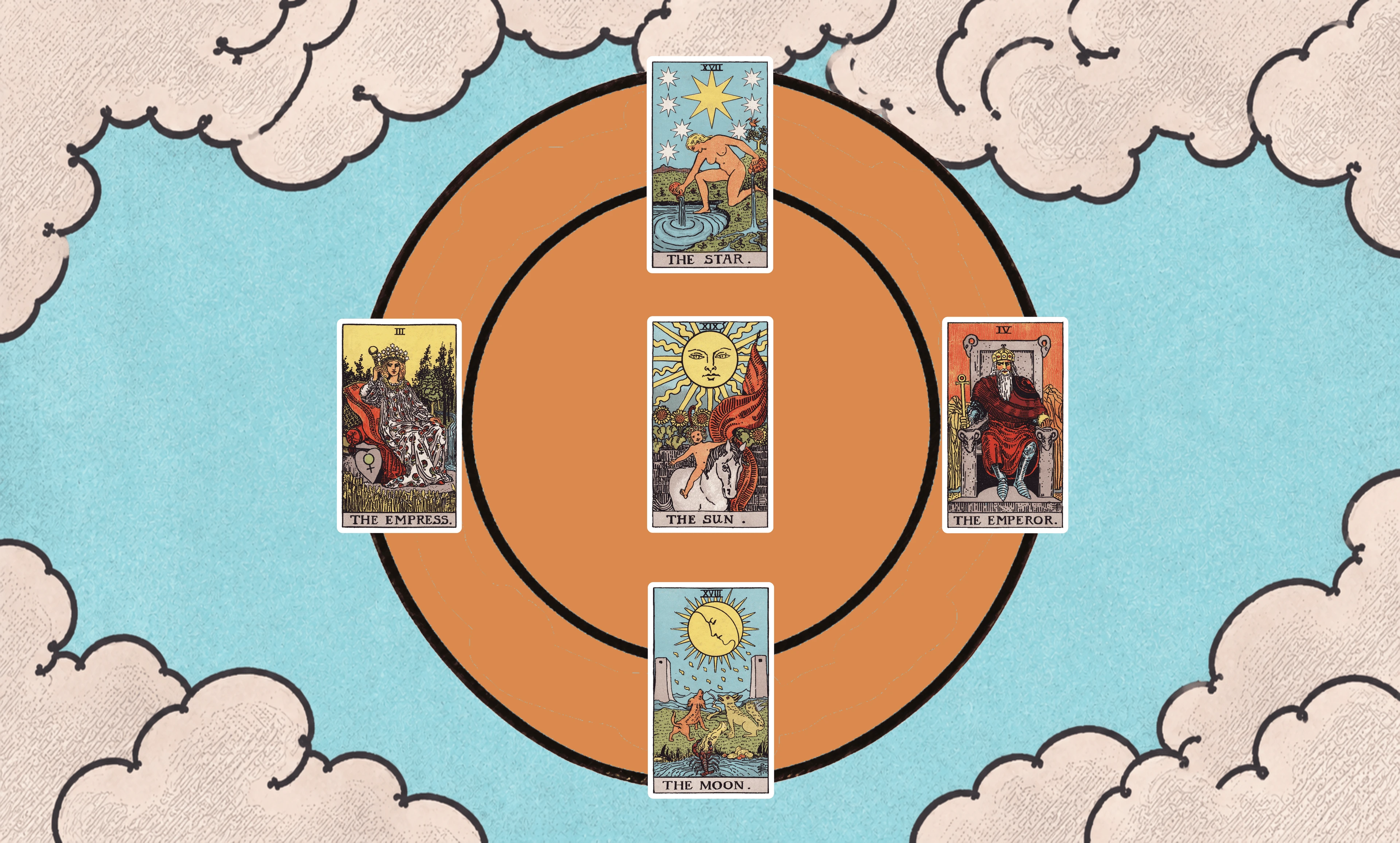
The Emperor reminds us to pay attention to structure and order. We must guard them well, or chaos will be our reward. The Empress, on the other hand, reminds us that our desire for structure must never come at the expense of openness. We must allow things to reveal themselves to us, rather than immediately trying to fit everything into a box.
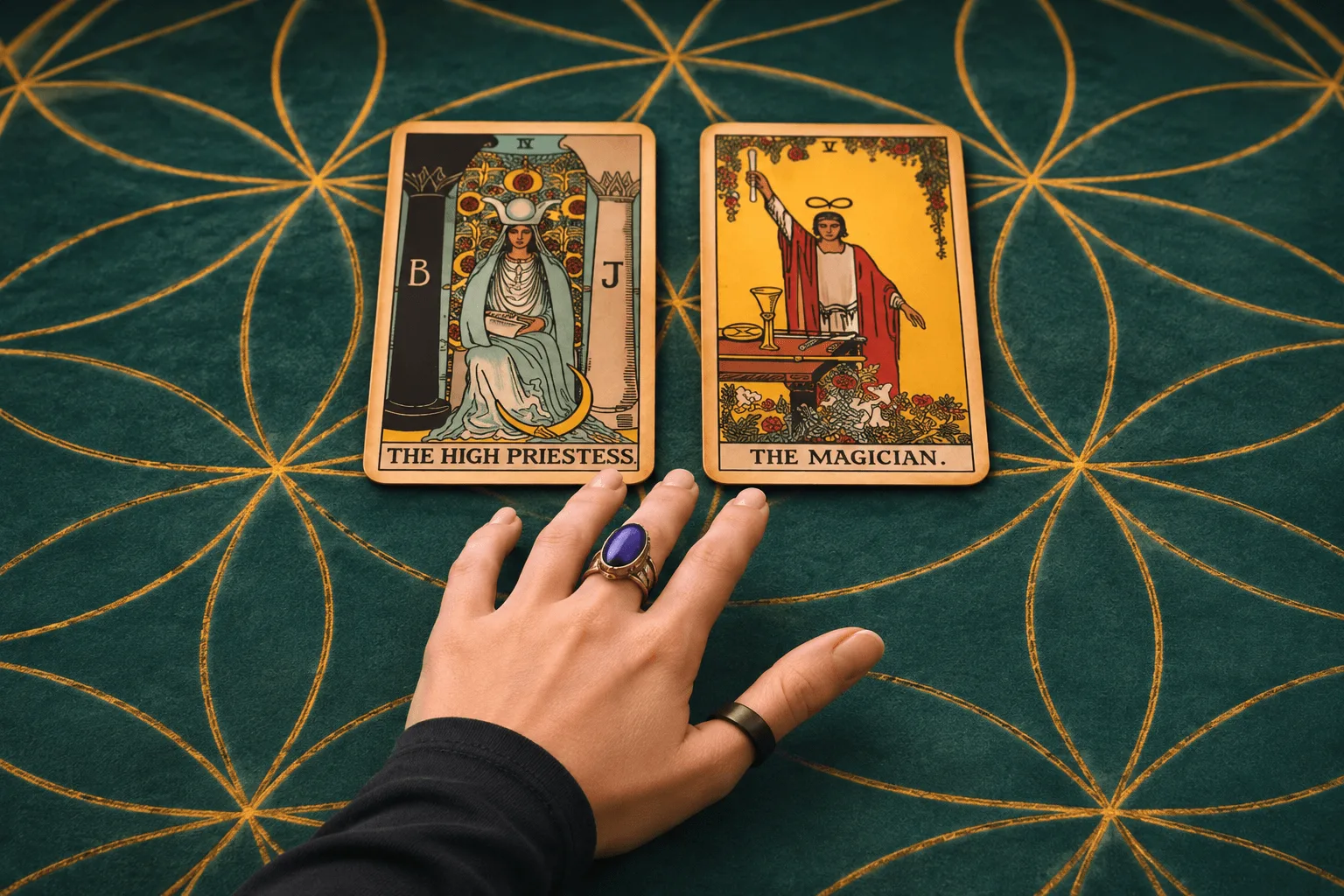
The mandala we have now is just a beginning, but it's worth playing and experimenting with. The idea that the tarot is a mandala should become more than just an abstract concept. For this to happen, you need to spend some time with it and make it your own. Maybe you can start by adding the High Priestess and the Magician to the mandala.