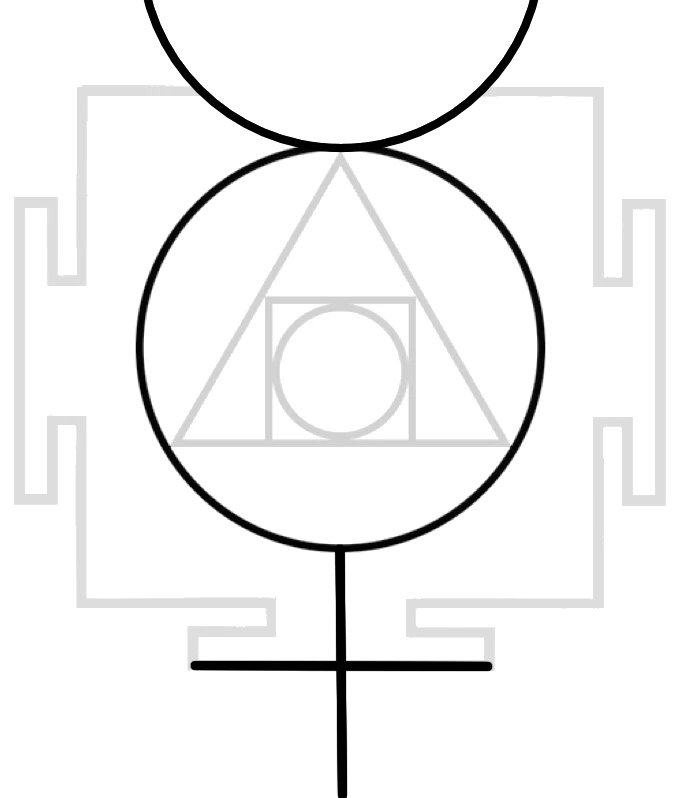
“Make of the man and woman a Circle, of that a Square, of this a Triangle, of the same a Circle and you will have the Stone of the Philosophers.”
As the motto of Emblem 21 from the Atalanta Fugiens illustrates, the clues we encounter in esotericism can be rather enigmatic. Yet we should not be misled by their apparent obscurity. The keys preserved for us by the Hermetic philosophers are not intended to make things difficult, but to help us gain access to the universal teaching.
It all comes down to self-knowledge.
The Universal Teaching
Squaring the Circle. Clearly Alchemy.
At first glance, the emblem accompanying the motto seems just as enigmatic. Yet it is one of the best-known illustrations of the Squaring of the Circle.
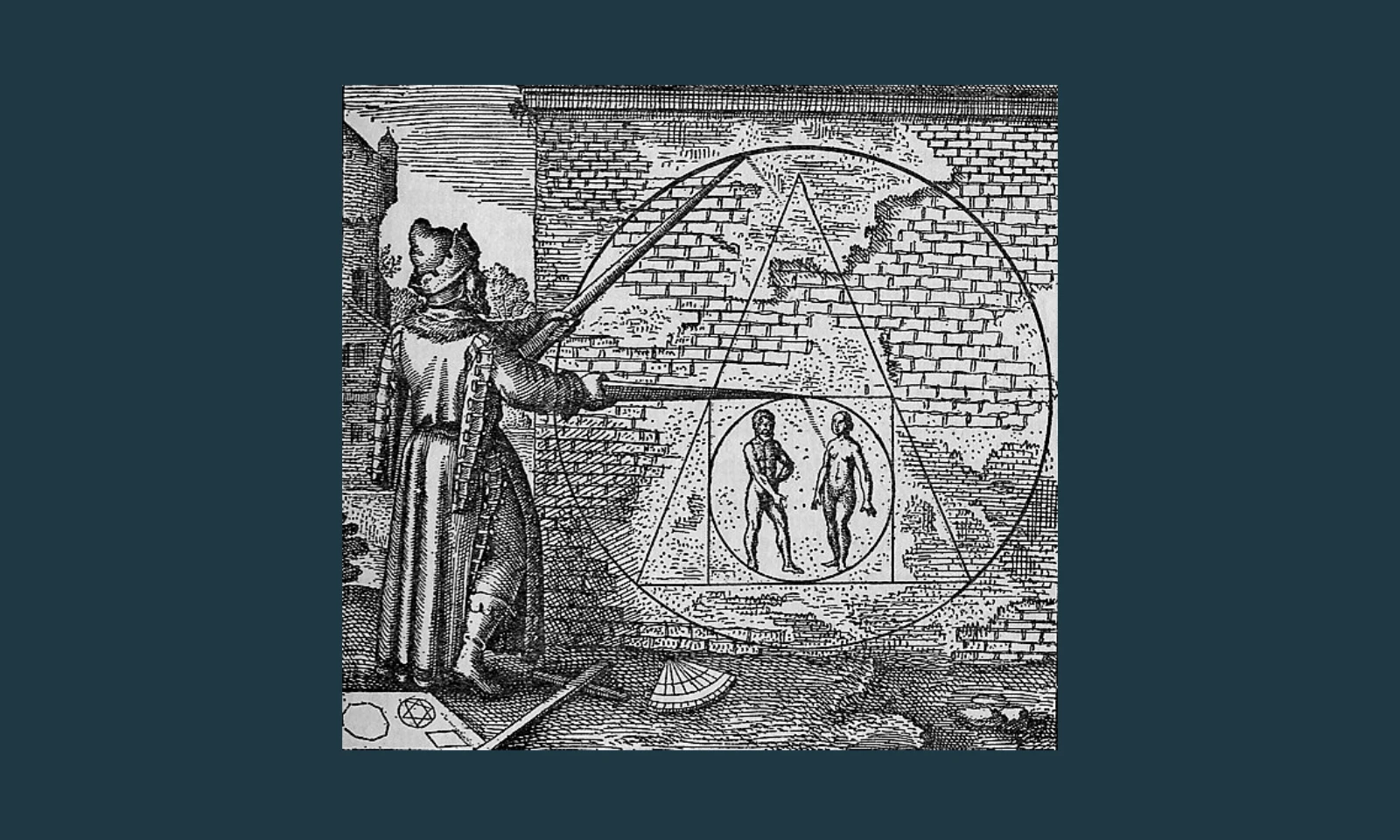
We are often told that squaring the circle is extremely difficult, if not impossible. But this is not what the alchemical Quadrature is about. We simply need to consider what it is actually intended to teach us. As we have already seen, it all comes down to self-knowledge.
Enigmatic? Clarity follows.
The aim is not to make things unnecessarily complicated, but to gain clarity. The Quadrature can show us how the human mind works. It can teach us how to move beyond our habitual ways of thinking.
The first circle, which is actually a wheel, shows us that our thoughts never stand still. Our thinking constantly goes round in circles. Because the mind is always in motion, we can never quite get a grip on it. It is like a spinning wheel: what was above a moment ago is now below. Even left and right seem to change places. This makes it difficult to find our bearings. As the wheel keeps turning, even what we consider an end turns out to be a new beginning. Nothing seems to remain fixed.
The Quadrature teaches us the alchemical principle of fixation. This is what the square represents. By holding the mind in place, like a block that stops a wheel from turning, we can begin to see it clearly. The insights we gain no longer disappear into endless circles of thought. Instead of being merely temporary, an insight can endure, giving it time to connect with other insights and gradually become clearer.
In short, the square allows us to get a grip on the circle. To understand why a square is used, we first need to recognise that we usually understand things by thinking in opposites. For example, we know what light is because we can distinguish it from darkness. Without darkness, we would have no concept of light.
This way of thinking in opposites is also known as black-and-white thinking. It is quite literally a linear way of thinking, since opposites lie along a single line. This becomes even clearer when we consider the opposition between left and right. Although they point in opposite directions, they can still be connected by a single straight line.
A single line, however, is not enough to enclose a circle.
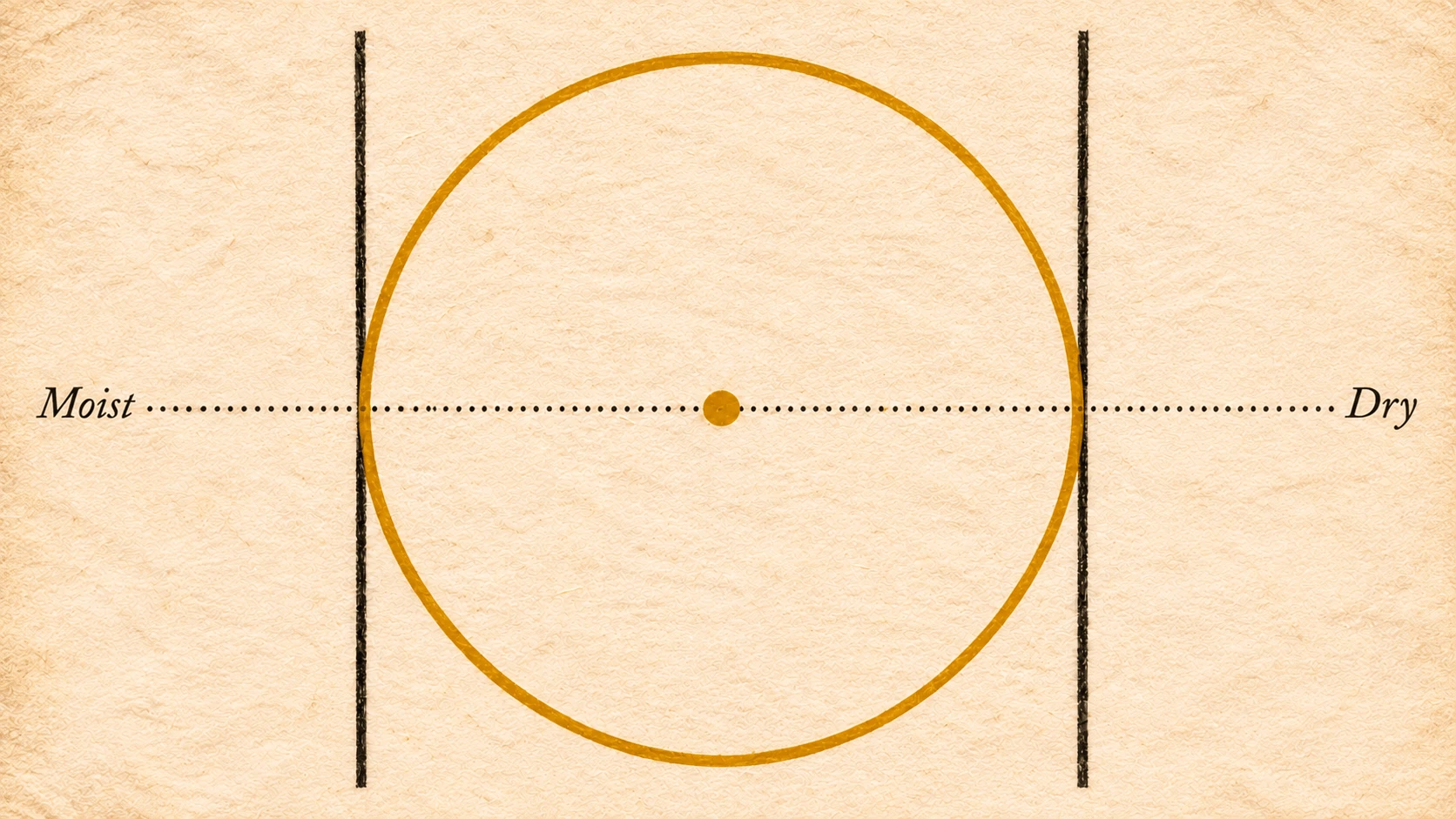
For that, we need a second pair of opposites, such as above and below. We have now enclosed the circle in a way that is familiar to our thinking, allowing us to grasp it. This makes it easier to maintain our grip on it and work with it. The square thus gives us control.
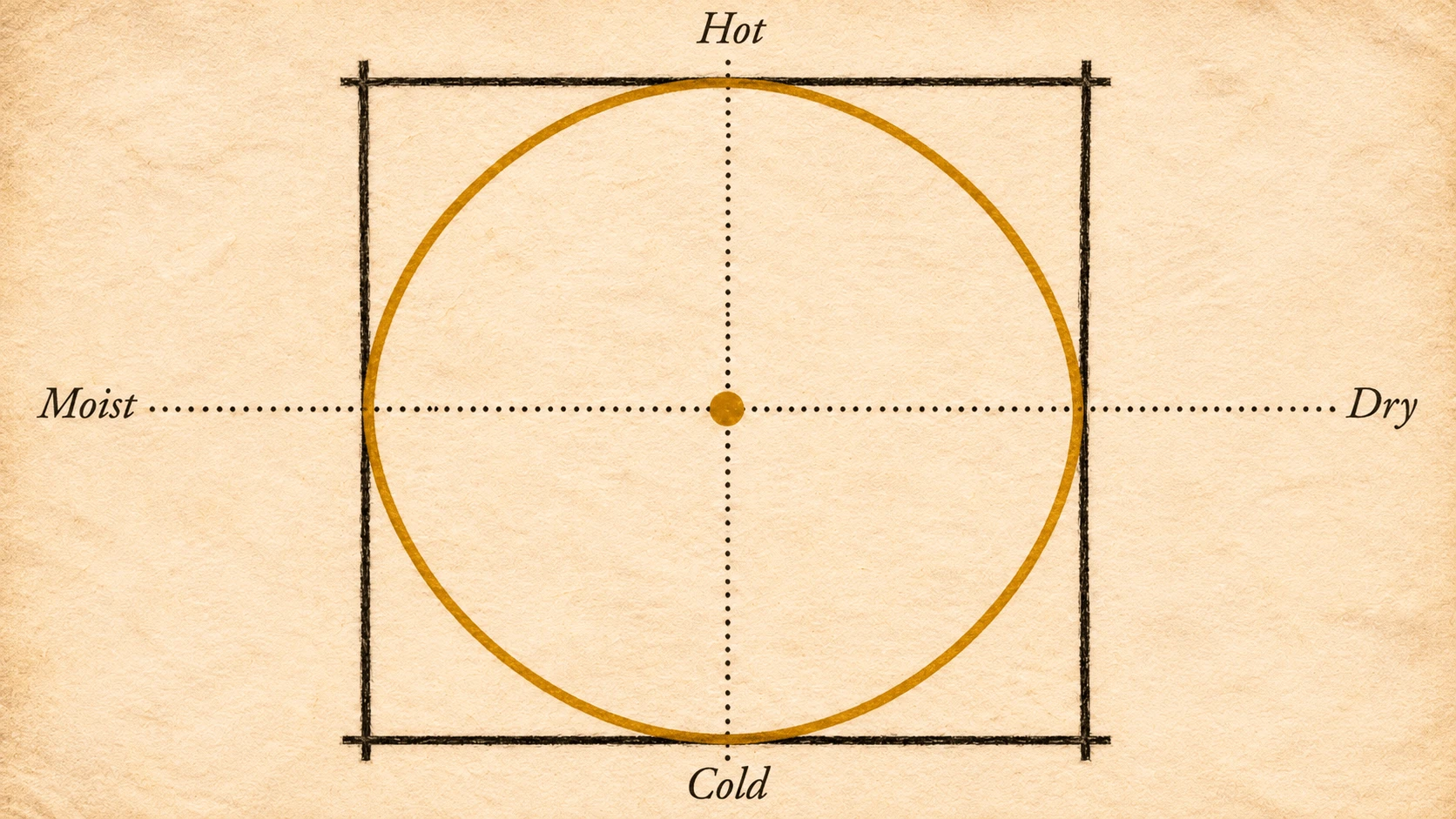
Thinking in squares is an enormous improvement over thinking along a single line. As geometry shows us, black-and-white thinking cannot really grasp anything at all: it encloses nothing! It is literally superficial, since a straight line does not form an enclosed shape and therefore cannot contain anything. To truly grasp an idea, we must therefore look at it not merely from two sides, but from four. This brings us closer to the circle. Yet even thinking in squares remains only an approximation, “for real life does not move in squares, but in circles”.
Emerging Triangles. A Pyramid.
We are still missing the triangle mentioned in the quotation from the Atalanta Fugiens. This changes when we realise that the opposite corners of the square are themselves opposed to one another. As we draw lines between the corners, connecting the opposites, triangles begin to emerge. In alchemy, the four corners represent the four elements.
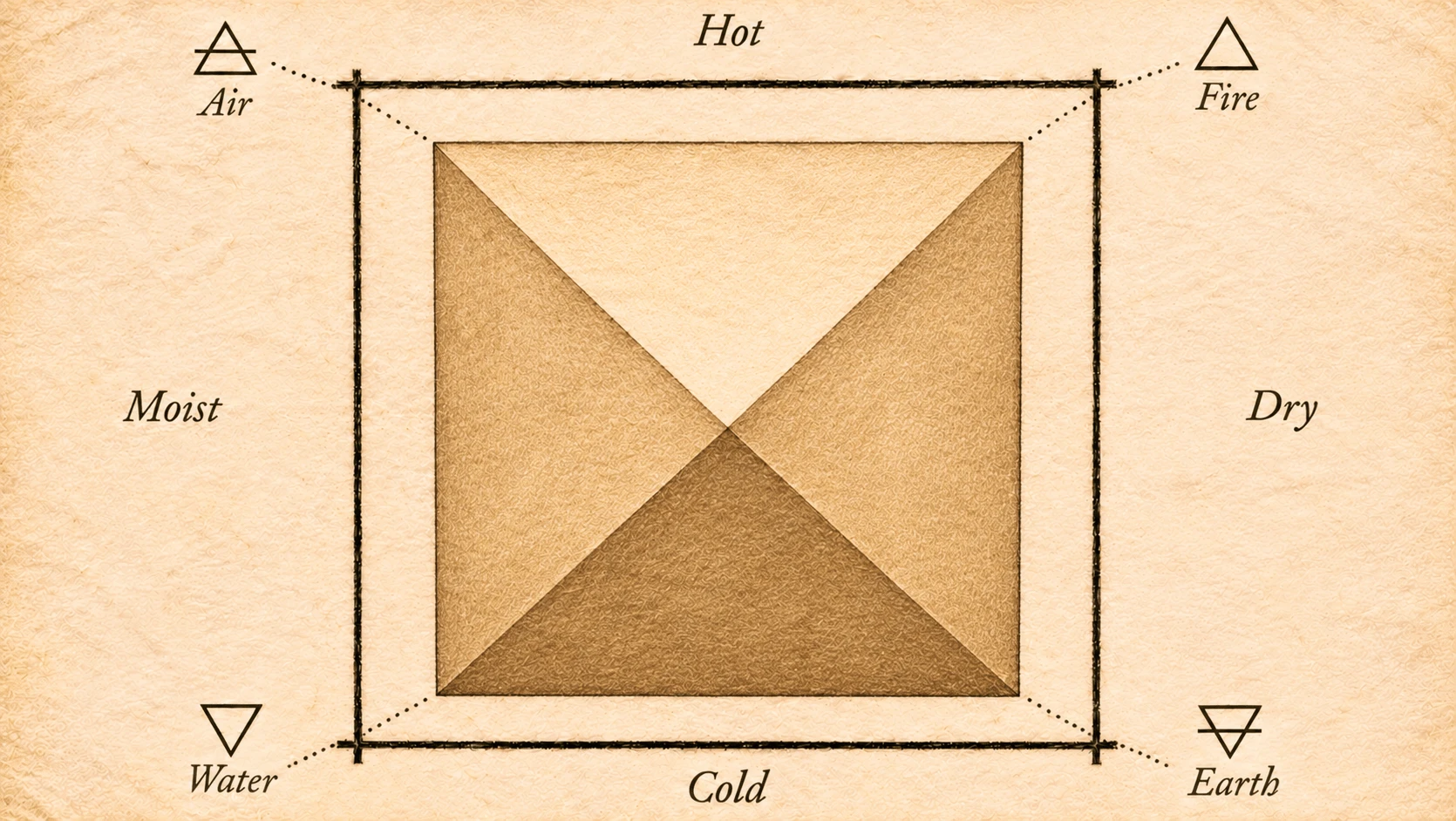
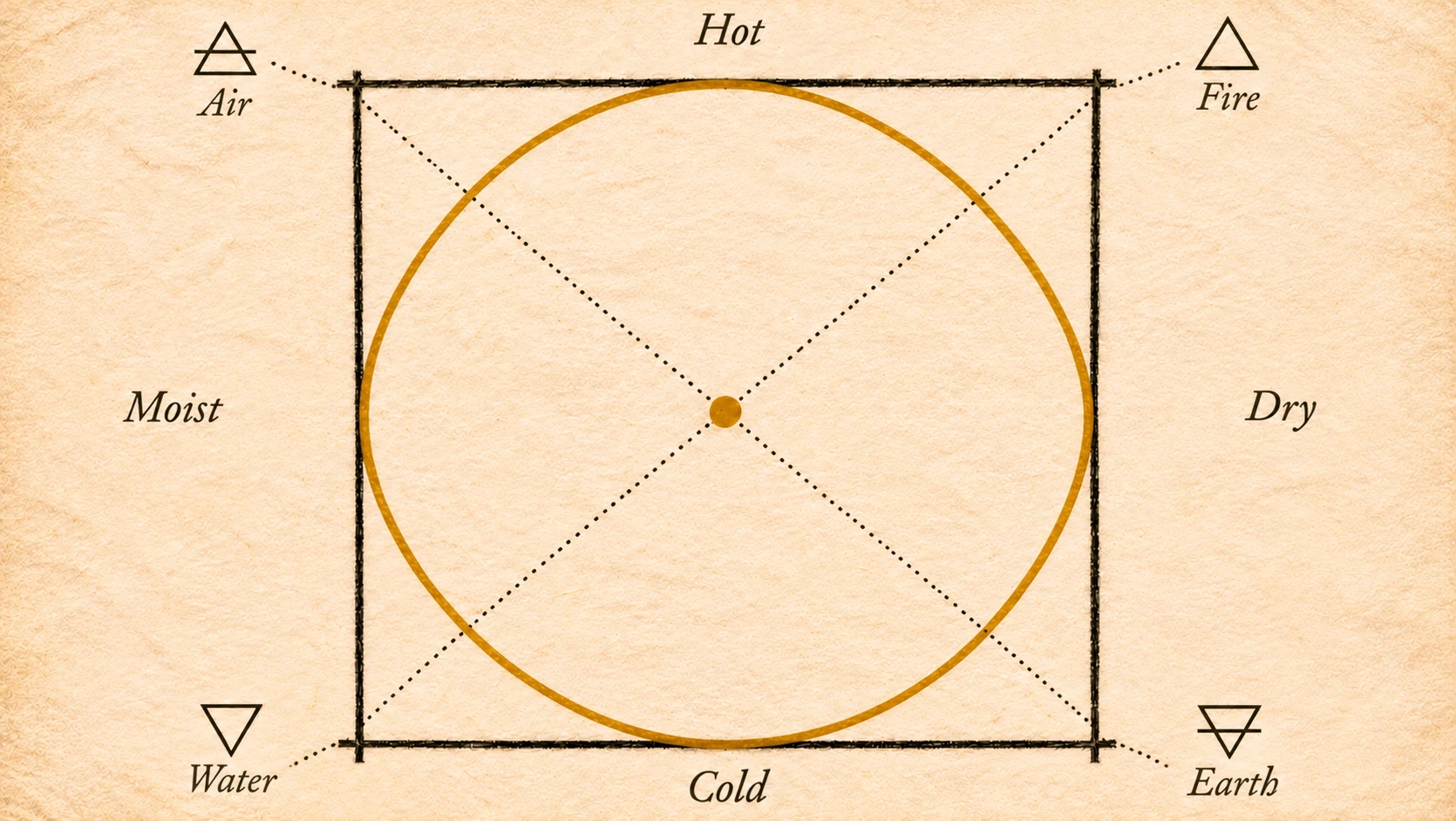
And if we look closely, we may even notice that we are now looking down on a pyramid from above. As we become more familiar with the meaning of the Quadrature, it will become clear that it is closely connected to the geometry of the pyramids and to the inner eye, rightly known as the third eye.
This is, of course, a highly simplified explanation of the Quadrature. But it serves to illustrate a few important points.
First, it shows how something that initially seems enigmatic can unfold into something that brings simplicity and clarity.
Second, this example illustrates how simple geometry is not merely theoretical, but forms an integral part of practical alchemy, helping us understand nature, within and without.
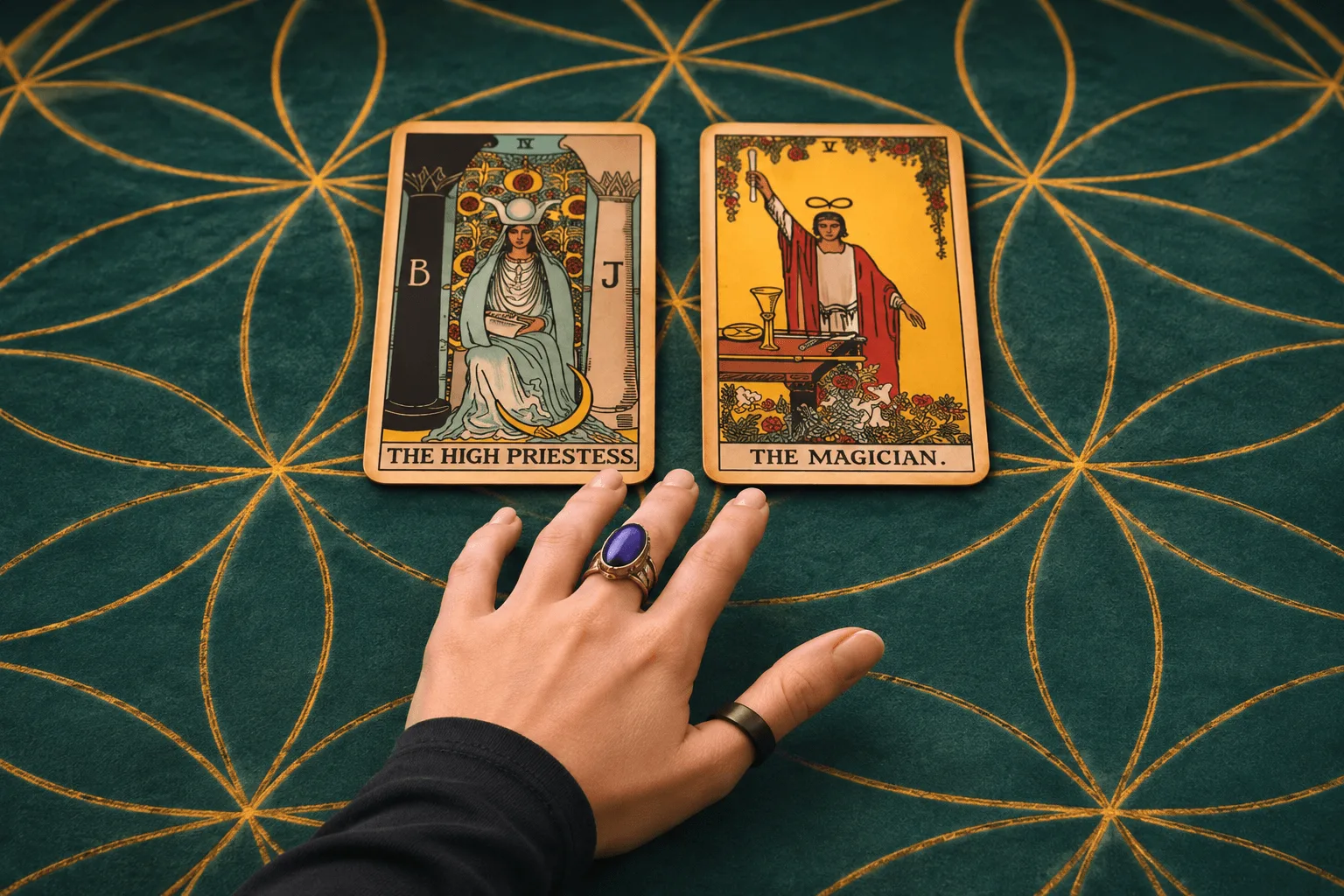
If you work with the tarot and take a closer look at the last image, you might also recognize the basic alchemical structure on which the tarot is built.
Further explorations

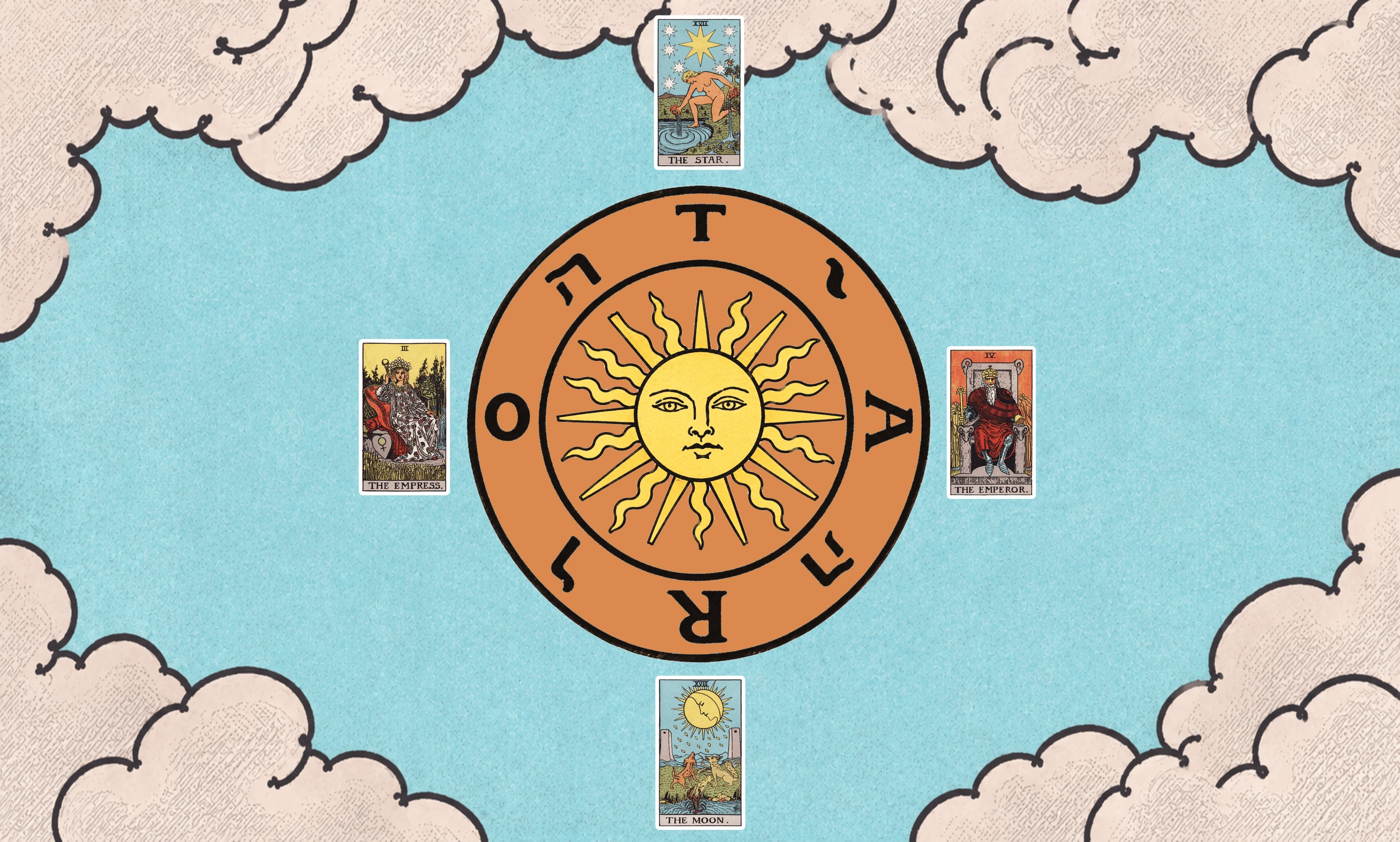
The Mandala of the West
A Living Mandala
The tarot is a living mandala. Because ultimately, it is your own mind.